

Your content doesn’t lack value. It’s failing because it doesn’t connect with the neural mechanisms that drive human sharing behavior. The difference between viral content and content that fades into obscurity is a systematic understanding of how to engineer the psychological triggers that make sharing not just likely, but virtually inevitable.
The Shareability Gap
Most content fails because it’s designed for consumption, not transmission. The Viral Architecture System bridges the gap by engineering psychological triggers that activate neural sharing pathways.
Neurology Behind Virality
Content virality isn’t random; it follows neurological patterns. High-arousal emotions generate twice the shares of low-arousal content by activating reward centers and prediction circuits in the brain.
From Creator to Engineer
Successful viral content requires shifting from creating content people value to engineering content people feel compelled to share. The mindset transformation changes everything about your approach.
Implement the Viral System
Viral content isn’t accidental; it’s architected. Follow the three-phase implementation plan to audit, optimize, and amplify your content’s inherent shareability for predictable viral outcomes.
I’ve seen it time and time again: businesses want to create a content library, and are excited to get started. They set aside a content calendar and start sharing as often as possible. But, after a month, the articles come less frequently. The social media posts are phoned in. The newsletters don’t go out on a schedule.
After two months, when nothing inevitably becomes viral, most business leaders shake their heads, throw up their hands, and give up.
If their content isn’t going viral, why continue?
The content they share is usually valuable. It contains the secrets to their success and offers solutions to problems that plague a wide audience.
So, why does it never get off the ground?
The Invisible Problem Plaguing Your Content Strategy
If you’ve spent any time on social media or browsing small business blogs, you’ll realize that 99% of content never reaches its full sharing potential. It’s not because the information is wrong. Most of the time, it’s because it violates the core psychological principles that drive human sharing behavior.
Let’s look at some general analytics for Facebook. Only about 1.2% of videos go viral on Facebook, yet those videos contain 38.7% of total views and 58.3% of total shares. That aligns with what most marketing experts refer to as the Pareto Principle, in this case, taken to the extreme. Only a tiny percentage of your content drives the vast majority of your engagement and visibility.
So, the root cause isn’t your knowledge or expertise. It’s that you’re creating content for consumption, not transmission.
It’s why mediocre content sometimes explodes while truly valuable insights remain obscure. The stupid videos that rage bait or share cute videos of animals aren’t cleverer than yours. They just contain content that people feel compelled to share.
Every funneling strategy should guide prospects through their buying journey. But even the most thoughtfully structured content will fail if it lacks the psychological triggers for sharing.
The Neuroscience of Sharing
All content comes down to what happens in someone’s brain when they decide to share it. Science reveals a fascinating pattern that contradicts conventional wisdom about content creation.
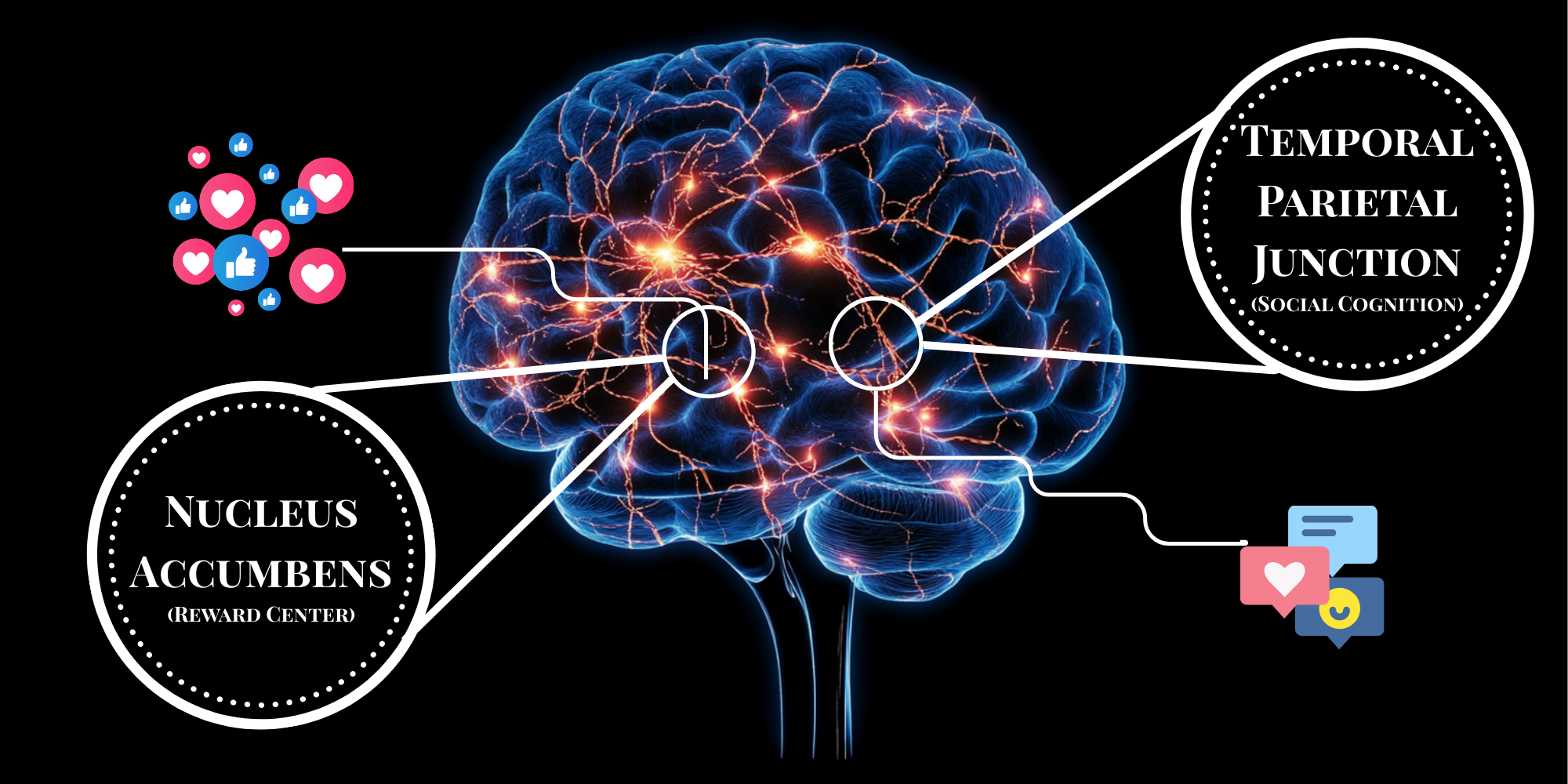
Specific neural pathways are activated in a predictable sequence when people encounter shareable content. First, the brain’s reward center—the nucleus accumbens—lights up in response to social validation.
Next, the temporal parietal junction, the brain region responsible for social cognition and prediction, forecasts how others might perceive the shared content. The brain goes through a prediction activity, asking itself, “Will my audience value this enough to validate my decision to share it?”
But at the crux of all this comes a revelation that, perhaps, isn’t very shocking: The most shareable content generates a strong emotional arousal. According to a study published by the Electronic Commerce Research, high-arousal videos were shared twice as often as low-arousal videos. In essence, the more your content elicits an emotional response, the more likely it is to go viral.
So, no, you’re not going crazy. Your content might have everything your customer needs to know about you. But unless it’s triggering the neural cascade required for sharing behavior, it’s not going to go viral.
The Viral Architecture System
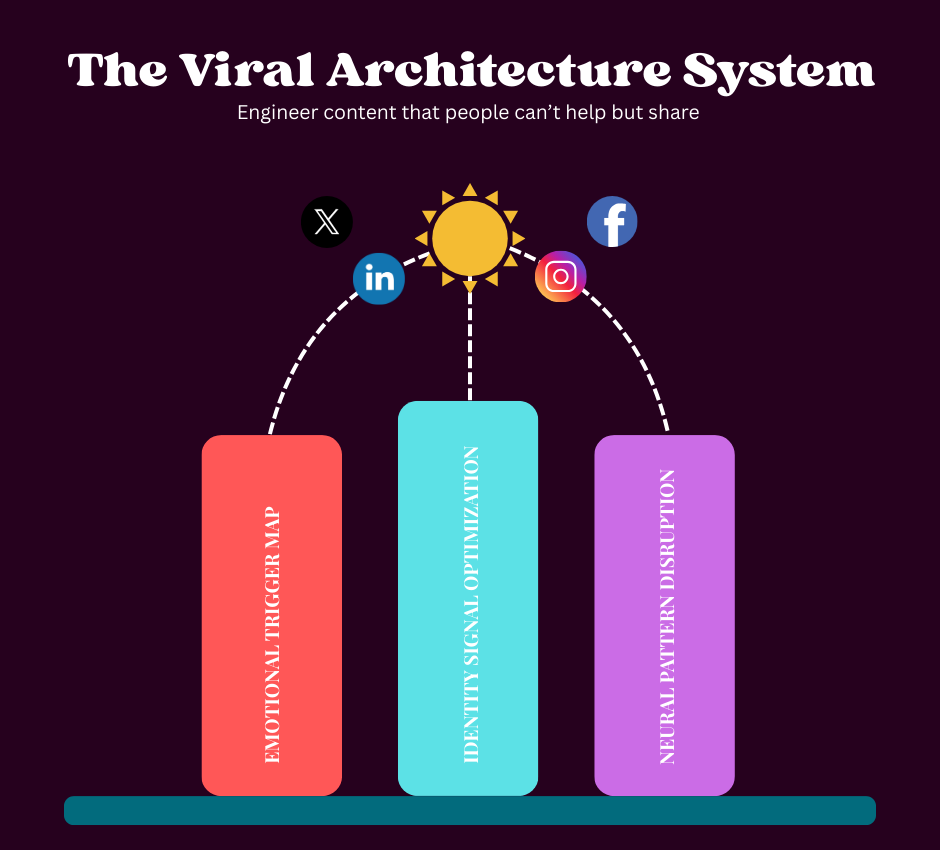
After studying viral content across multiple industries, I’ve found that it comes down to three psychological mechanisms. It’s the system I’ve called The Viral Architecture System:
- Emotional Trigger Mapping: Identify the specific high-arousal emotion triggers that are most effective for your unique audience. The goal is to generate neurological urgency and encourage sharing.
- Identity Signal Optimization: Craft content that helps your readers signal their ideal professional identity while encouraging the act of sharing. The goal is to transform your content from mere information into valuable social currency.
- Neural Pattern Disruption: Structure content to create pattern interruptions that capture attention and activate the brain’s sharing pathways. The goal is to create strategic cognitive jolts that will bypass the brain’s filtering mechanisms and create immediate focus.
That’s it. That’s the foundation for creating viral content. It works in harmony with psychological conditions where sharing becomes almost inevitable rather than optional.
Shifting the Mindset from Creator to Sharing Engineer
The first focus is to make a fundamental mindset shift. You’re not just a content creator. You’re a sharing engineer.
Instead of going the traditional content creation route, focusing on value delivery, instead, design content backward from the moment of sharing. Construct every element that facilitates viral transmission.
Most of the time, it comes down to abandoning comfortable assumptions. Quality information, design, production value, or even direct usefulness don’t guarantee virality. It’s based on the precise calibration of psychological triggers that makes not sharing feel like a missed opportunity.
It’s a learning curve for sure. But, once you understand the basic principles, viral content engineering becomes a systematic process rather than waiting for lightning to strike. Embracing this approach has increased average share rates by 400% to 800% in six months, as seen by my clients.
Implementing the Science of The Viral Architecture
Random content is the bane of content creation. After a while, when you’ve exhausted all your personal insights, it becomes much more difficult to share content.
Virality comes down to a science.
Emotional Trigger Mapping in Action
Before creating any piece of content, identify the emotional triggers that are most likely to resonate with your audience. What makes them tick? What makes them want to engage with you?
Though there are many approaches you can take, the eight high-arousal emotions that drive sharing are commonly broken down into the following:
- Awe (expansive wonder)
- Anxiety (manageable threat)
- Anger (righteous indignation)
- Fear (with an available solution)
- Vindication (the urge to be proven right)
- Insider status (exclusive knowledge)
- Practical utility (with status enhancement)
- Identity reinforcement (values alignment)
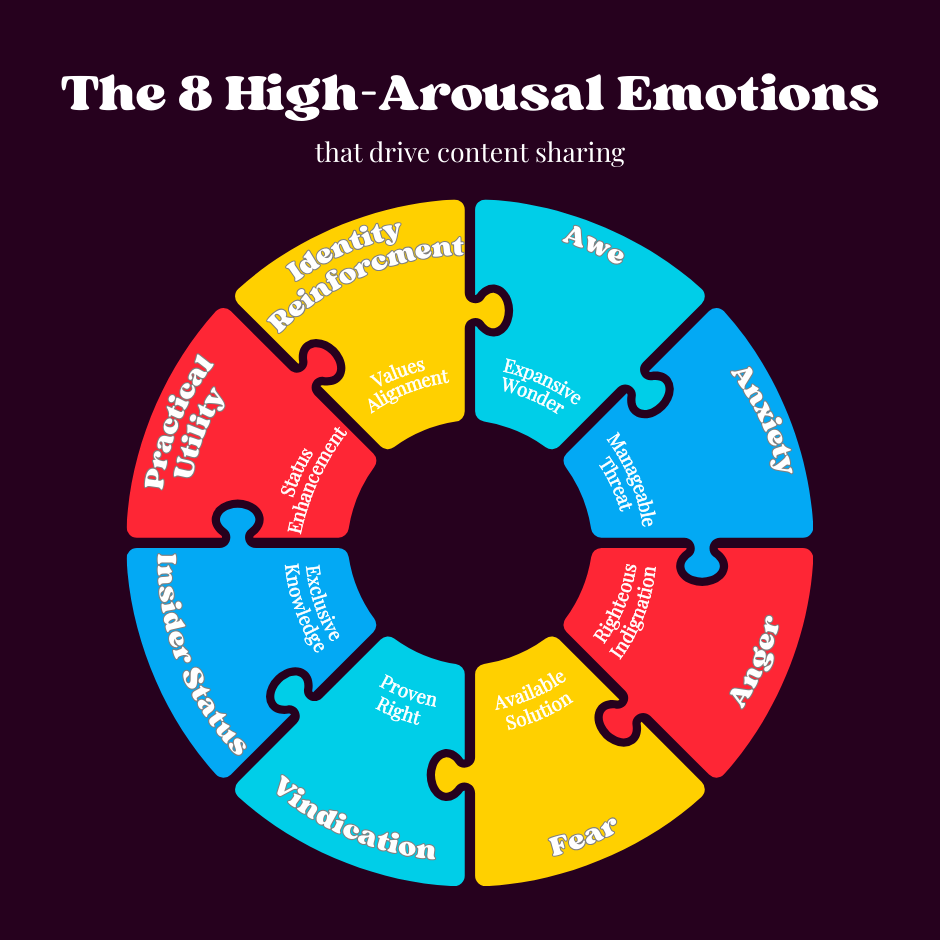
Each piece of content can directly relate to two or three of these emotional triggers. So, make sure your headline, opening, and conclusion explicitly activate those emotions.
Map those triggers to your specific audience to create predictable emotional responses.
Identity Signal Optimization
People share content not just for its inherent value, but to signal their identity. To create viral content, help your audience communicate something positive about themselves through the act of sharing.
In professional circles, that often means signaling expertise, insider knowledge, progressive thinking, or valuable connections. For each piece of content, it comes down to defining:
- What does sharing this content say about the sharer?
- How does it enhance their perceived identity?
- What specific phrase or insight makes you look more valuable to your network?
The goal is to target “identity enhancement phrases,” phrases that explain who your audience is, that can be easily extracted and quoted. Sometimes that means creating statements that make the sharer seem more intelligent or informed. At other times, it portrays the sharer as more empathetic.
Identity signal optimization is your form of social currency. You’re playing into the idea that sharing your content rewards their behavior with status enhancement.
Neural Pattern Disruption
The next piece of the puzzle has everything to do with cognitive science’s ability to capture and maintain attention. The brain naturally filters out expected information and immediately flags pattern violations. Integrating this into your content usually means:
- Challenging an established industry assumption
- Presenting familiar information in an unexpected format
- Introducing counterintuitive research findings
- Creating a novel conceptual framework for common problems
- Beginning with a micro story that subverts expectations
The right trigger serves as a cognitive jolt that breaks through attention filters and signals to the brain that this content deserves priority processing. That disruption is the first step in the sharing decision pathway.
Channel Optimization
The final step is finding the correct distribution path. LinkedIn provides one of the best distribution channels for thought leaders, and you can read all about it in The Ultimate LinkedIn Strategy. Of course, it depends on the channels your audience frequents the most.
That hook, that element that makes it easy for your audience to click on your content, is often a multidimensional endeavor. Maximizing visibility in professional networks usually incorporates some of these technical elements:
- Create modular, extractable visuals that are specifically designed for sharing
- Develop “snippet optimized” sections that maintain their impact when quoted
- Include network expansion questions that prompt colleagues to tag people in their networks
- Use platform-specific formatting that makes it easy for viewers to preview your content
- Place share triggers at both emotional and logical peaks in your content
Shareability is essentially about psychological triggers and technical optimization that makes it easier to share. And that process becomes much simpler when you start driving those conversations with content calendars.
Status Enhancement Conclusions
No post is complete without a call to action. You want to encourage your sharer to distribute the content. A lot of times, these can take forms like:
- A surprising insight that positions the sharer as ahead of the curve
- A synthesizing framework that demonstrates intellectual clarity
- A predictive statement that showcases foresight
- A counter-narrative that positions the sharer as an independent thinker
The most effective conclusions use a combination of practical takeaways and status-enhancing perspectives.
Your Viral Architecture Implementation Plan
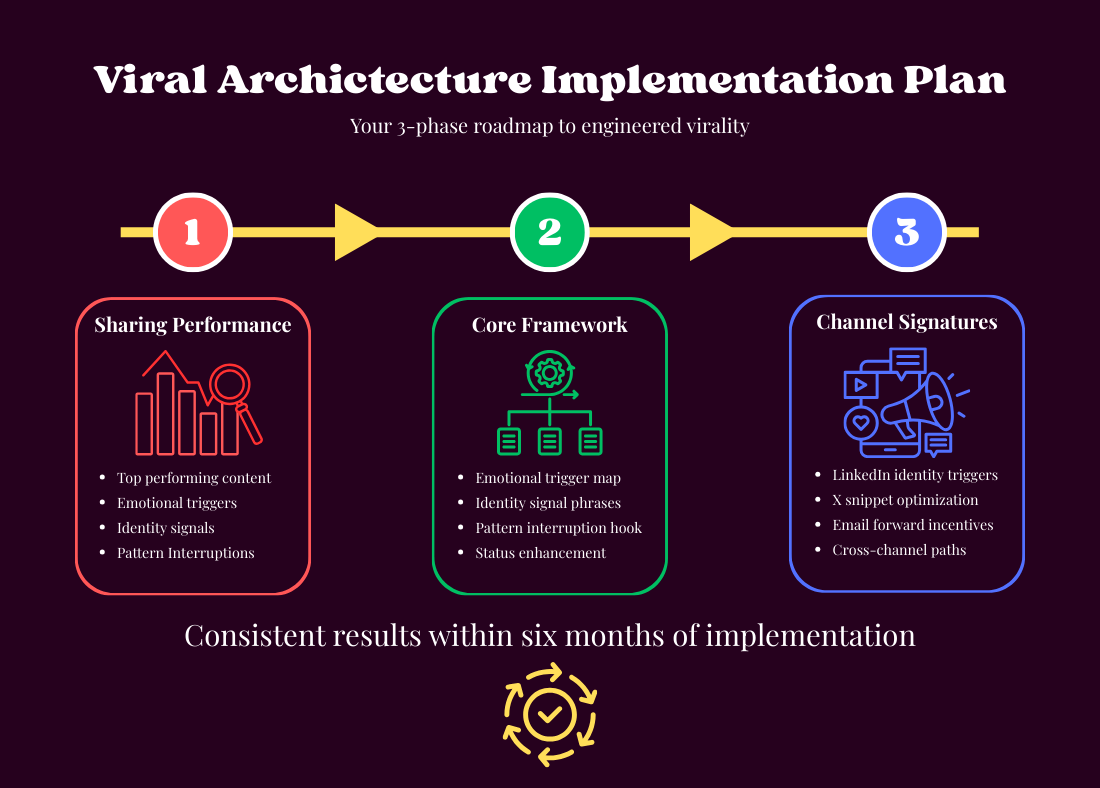
Most of the time, your content virality works hand in hand with your content calendar. Here’s a three-phase action plan to engineer viral potential into every piece of content you create.
Phase 1: Audit Your Current Sharing Performance
Review the last 10 pieces of content to assess their performance. Narrow down
- Which pieces generated the most shares relative to views
- Emotional triggers you used in your high-performing content
- The identity signals offered in your most shared material
- Pattern interruptions that appeared in well-distributed pieces
Identify your strengths and weaknesses visually by putting them into a color-coded document tracker. The more angles you try, the more you can narrow down what works and what doesn’t.
Once you’ve found social media triggers, you can integrate them into your newsletters, essentially turning your e-mail into cash.
Phase 2: Implement the Core Shareability Framework
For the next week that you’re creating content, find ways to integrate each unique principle into the different types of content you produce:
- Create an emotional trigger map before writing
- Develop three to five identity signal enhancement phrases
- Design one strong pattern interruption hook
- Build a status enhancement conclusion
Then, sit back and notice the difference. If you’re not saying anything that’s making true waves, it’s time to adjust your approach. Maybe you handled the hook inappropriately. Maybe it’s time to add new, engaging content.
Phase 3: Develop Your Channel-Specific Viral Signatures
Different platforms have distinct sharing psychologies. For example, LinkedIn and YouTube will attract different audiences. So, in this phase:
- Develop LinkedIn-specific sharing triggers focused on identity
- Create Twitter/X snippet optimization for your key insights
- Build e-mail forward incentives into newsletter content
- Design channel crossing sharing paths that maximize distribution
Your ultimate aim should be to make your content as viral as possible across as many platforms as possible. That means focusing on the little things. Instead of creating monumentally large content, break the content into quotable snippets.
The key to consistency is intentional design. Just as you would master the importance of planning and writing for a book, proper planning in terms of narrative content and social media makes the difference between virality and failure.
Ready to Implement the Viral Architecture System?
If you’re like all businesses, you’re desperate to stop creating content that dies in the digital darkness. It’s why I developed the viral architecture system to make your content strategy easier.
As your ghostwriter, I don’t just create weekly content. I build a systematic sharing engine that amplifies your visibility across networks. Each piece is built on the proven viral architecture framework, meticulously engineered to drive sharing behavior at the neural level.
Ready to engineer content that people can’t help but share? As an award-winning ghostwriter, I specialize in creating content and books that stand the test of time. Don’t leave your content’s success to chance. Contact me today at m.ashcroft@keplerscript.com to transform your ideas into content that spreads organically through networks and drives exponential growth for your brand.