

Nothing destroys your audience’s trust faster than when you post and ghost. The science shows that consistency isn’t about staying visible but about hardwiring reliability into your audience’s neural pathways through predictable value delivery.
The Brain's Science of Trust
Your brain craves consistency. Predictable publishing = oxytocin release = 67% more leads.
Business Results Focus
Consistent content = 3x conversions. Sporadic posting destroys trust pathways.
End Content Chaos
Stop Sunday panic publishing. Build systematic trust with predictable schedules.
Finding a Professional Solution
Ghostwriters create consistency systems. You focus on business, we build trust.
Imagine your audience opening their inbox every Monday morning at 10:00 am on the dot. They’re looking for your newsletter that never showed up. And don’t get started on your podcast. They haven’t checked that for a couple of months.
Sporadic publishing means you’ve missed three weeks, and now you’re scrambling to create something, anything, to fill the void.
Most creators go through the same thing at one point or another in their careers. It’s why businesses struggle to create trust-building engines for their content machine. So many people are obsessively focused on content quality that they put off posts, podcasts, newsletters, even books. After a while, the momentum that had your audience going completely vanishes.
And here’s where most of that goes wrong: Your audience isn’t just consuming content. Every time you post, you’re setting up neural associations with your brand and reliability. Every time you show up consistently, you’re strengthening those pathways. Every time you disappear, you’re weakening them.
Business leaders who build audiences that convert recognize the need for showing up consistently. And that’s why so many other creators are just a flash in the pan.
Why Your Brain Craves Publishing Consistency
Consistency has a neurological response. Every time you post, you’re literally rewiring your audience’s brain to your publishing patterns.
Most of that comes down to what neuroscientists like to call “predictive processing.” Your brain consistently generates and updates different mental models of the same environment. Those models predict future input signals and compare them with actual sensory data. So, when you publish consistently, you’re training your audience’s brains to create those predictive models.
In essence, you’re creating trust. And, at its heart, trust is about risk. We take a chance on trust every time we gamble on new data. Our brain learns to process that risk and make a decision based on reliable data.
So, when you post consistently, you show that there’s little risk when they sign up for something you’re creating.
Your brain releases oxytocin—or the trust hormone—when you consistently provide content. In the same vein, high stress produces a spike in epinephrine. Those two chemicals compete with each other when our brains recognize high-stress situations.
What if we start to see this on a larger scale? Because humans are social creatures, we synchronize our actions and emotions with the people we most commonly interact with. It’s why we feel joy together, sadness together, and triumph together. There’s a literal electric connection that happens in our brains when we frequently connect.
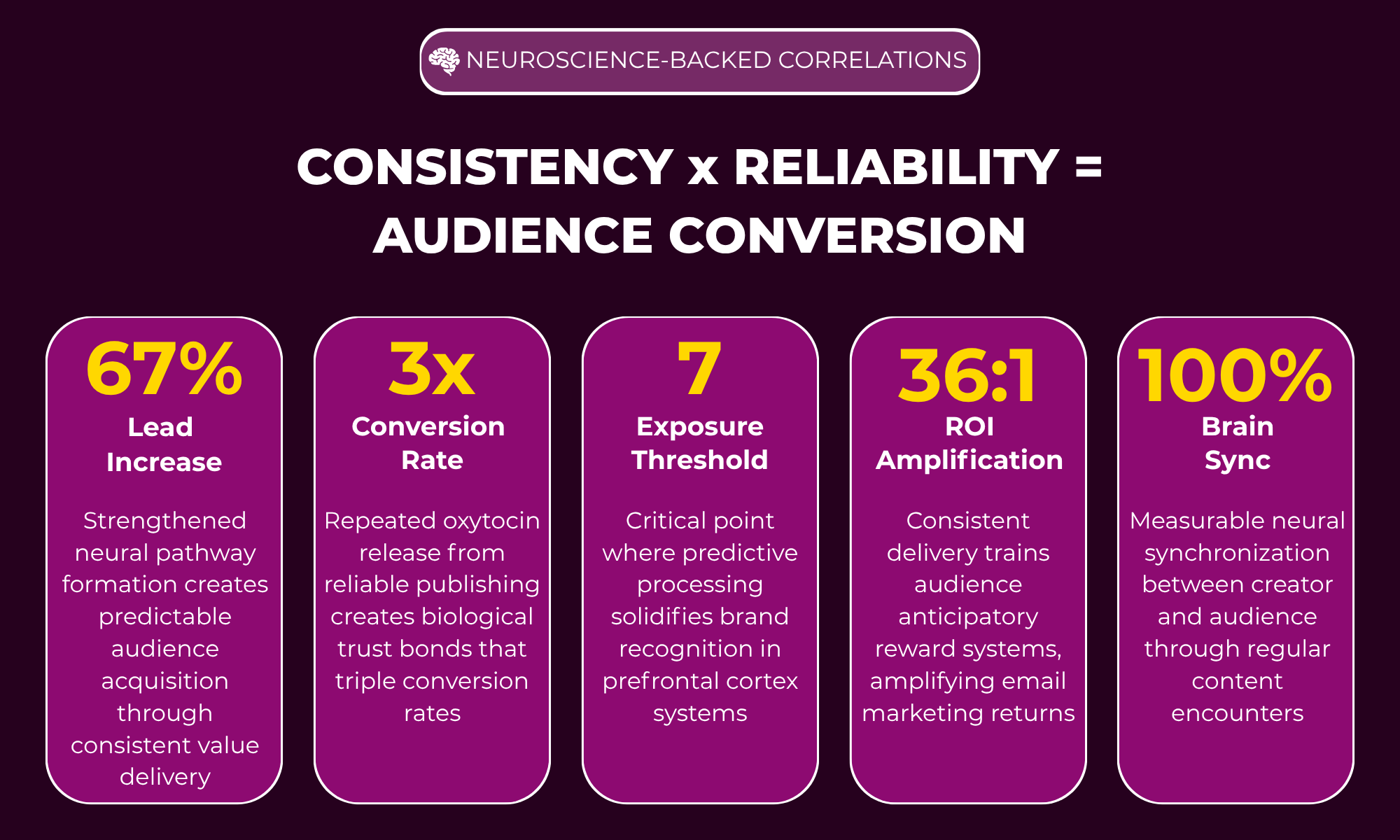
Now, consider how that plays out in marketing. When people consistently see your content, they’ll trust it more.
If your brain is constantly looking for pattern recognition and reliability signals, just imagine how much consistency can strengthen those neural pathways. Because so many people are perpetually online, constantly bombarded with all kinds of content, your audience’s brains will subconsciously filter your content into a trustworthy box when you publish.
Strategic Publishing Architecture
But here’s where most people can’t connect the dots: The answer isn’t just publishing more frequently. You don’t have to become a content machine. You just need to build an approach that treats consistency as a systematic trust-building mechanism. It’s a process I like to call Strategic Publishing Architecture.
A Strategic Publishing Architecture operates on three fundamental principles:
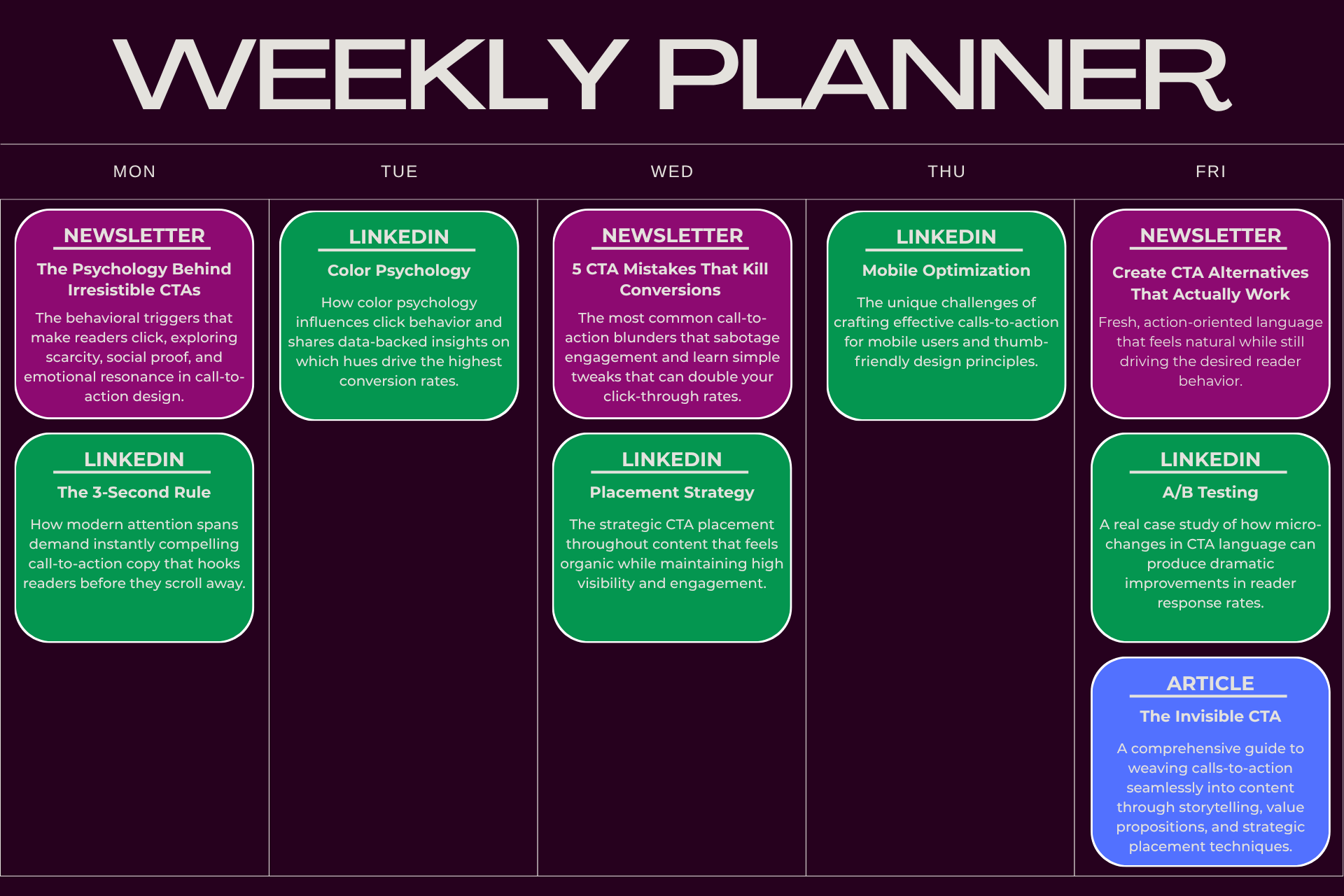
Principle 1: Predictable Value Cadence – Your audience needs to know exactly when to expect value from you. That doesn’t necessarily mean posting daily, but it’s important to set up reliable intervals that align with your audience’s consumption patterns and how much you can actually produce.
Principle 2: Cross-Platform Synchronization – Your consistency strategy should work across all platforms simultaneously. For example, your audience should see at least three to five LinkedIn posts weekly, a newsletter on the same day of every week, and an article on another day. Each new piece of content should strategically reinforce your message.
Principle 3: Sustainable Production Systems – Systems most often break down because there’s a lack of motivation associated with those systems. So, create a system that runs independently of your energy levels, inspiration cycles, or business demands. It shouldn’t matter whether you’re having a great month or a bad one. You’ve already set yourself up for success.
Think of this strategy like a lighthouse: Your content needs to be visible, predictable, and valuable to navigate toward your brand. Lighthouses don’t flash randomly. They operate on precise intervals and with reliability.
Once you take the strategic content route, such as content funneling, you can actively serve different stages of the customer’s journey. Soon enough, your publishing consistency will determine whether prospects can successfully navigate that funnel or get lost in the gaps between your publications.
Implementation: Your 90-Day Consistency Sprint
Building publishing consistency should require systematic implementation rather than willpower. So, to make it easier, here’s your step-by-step framework for establishing an unshakable publishing architecture:
Days 1-30: Foundation and Frequency Mapping
First, start with a brutal honesty about your capabilities. You may want to post multiple times a day, but most people don’t have that kind of time. Begin by conducting a content capacity audit:
- Track your actual content creation time for two weeks
- Identify your peak creative hours and energy patterns
- Calculate realistic production schedules based on actual data, not aspirational thinking
- Establish your minimum viable publishing frequency, something you can maintain even during difficult periods
At the beginning, focus on establishing just one primary publishing channel. If you’re building a newsletter list, commit to weekly delivery. If your lead generation on LinkedIn is struggling, establish a posting rhythm you can sustain long-term.
Days 31-60: System Building and Buffer Creation
During this phase, focus on building an operational infrastructure that makes consistency effortless. Create a content calendar that focuses on systematic planning and eliminates decision fatigue.
Here’s a breakdown on how to create your content buffer system:
- Develop templates for each content type you produce
- Build a four-week content buffer (so you can always stay one month ahead)
- Establish emergency content protocols for unexpected disruptions
- Implement batch creation sessions that maximize your productive hours
In short, create a system that works for you. That could mean producing a podcast once every two months or once a week. Whatever flow works for you is the best way to establish consistency.
Days 61-90: Cross-Platform Integration and Optimization
The final phase expands your consistency framework across multiple channels while maintaining your core publishing rhythm. This is the point at which compound effects of consistency begin to accelerate your audience growth and conversion rates.
Focus on strategic message threading across platforms:
- LinkedIn posts that preview newsletter insights
- Newsletter content that drives traffic to detailed articles
- Articles that establish authority for your service offerings
During this phase, your most beneficial tool is your metrics. Track not just publishing frequency but engagement patterns, subscriber growth, and conversion rates. Most of the time, your most consistent periods correlate directly with business results.
Building on that consistency, like newsletter marketing, could vastly increase your ROI. But that depends entirely on your audience’s trust and your reliability.
Make Consistency Effortless
Building publishing consistency while running a business is nearly impossible. Most entrepreneurs fail to consistently publish, not because they lack insights, but because they can’t maintain the demands of systematic content creation.
This is where professional ghostwriting becomes your secret weapon.
Working with Kepler Script means you’ll get:
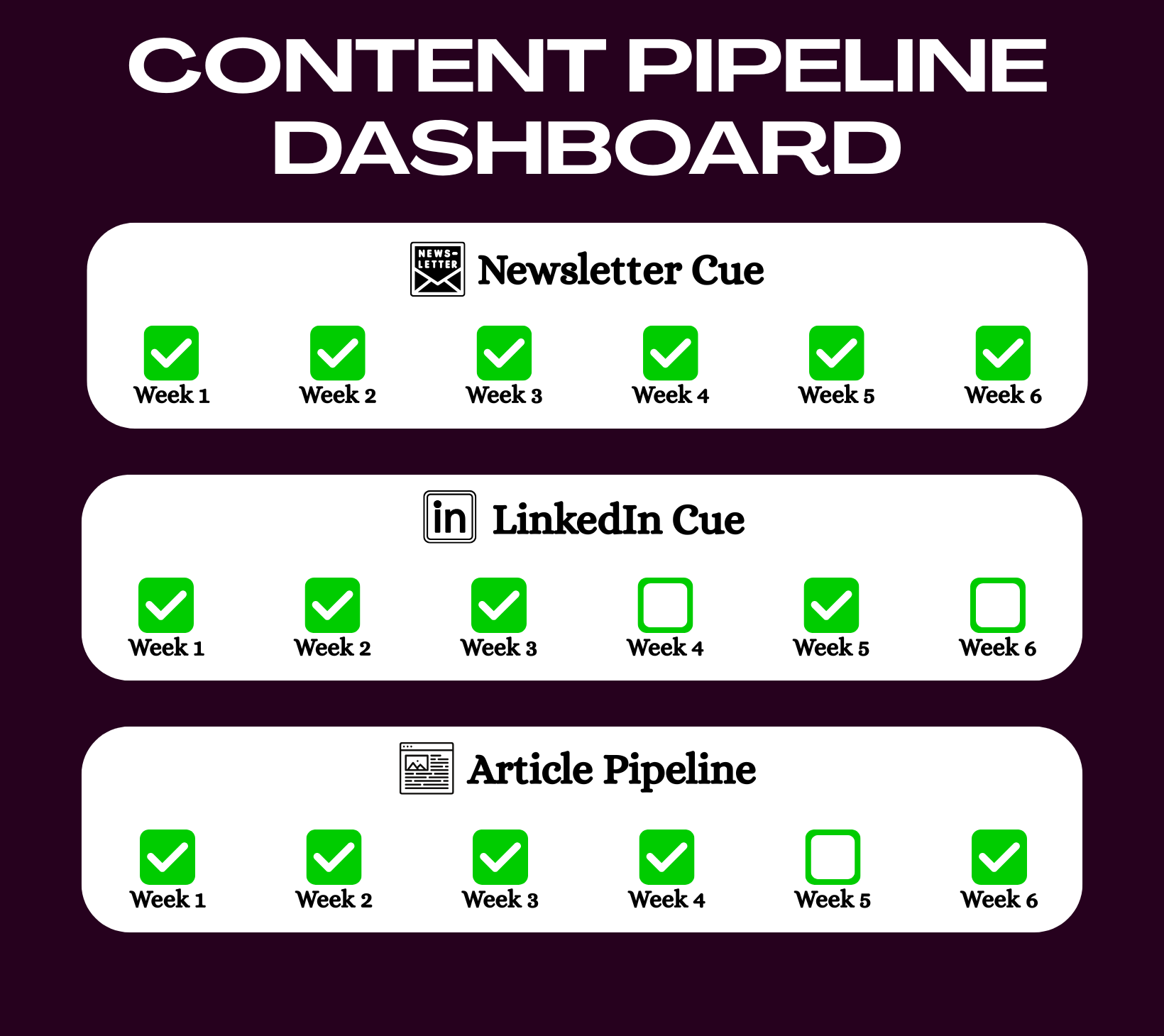
Complete Publishing Consistency: Never miss another deadline. Your content calendar runs like clockwork because it’s handled by a professional ghostwriter. You’ll get weekly articles, newsletters, and LinkedIn posts delivered precisely when your audience expects them.
Systematic Trust Building: Every piece of your content is designed to strengthen your authority while maintaining the neural consistency patterns that build genuine audience relationships.
Cross-Platform Multiplication: One strategic conversion becomes a week’s worth of content across all channels, each piece reinforcing your expertise from different angles.
Buffer Management: Stay four to six weeks ahead of schedule automatically. No more Sunday night panic about Monday’s content.
Your expertise has proven its value. Now it’s time to make it work as systematically as your business processes.
Ready to transform sporadic publishing into systematic trust-building? Contact me today to discover how professional ghostwriting services can establish the publishing consistency that turns your expertise into predictable business growth.
Your audience is waiting for you to show up consistently. The question is: Will you meet their expectations or train them to expect disappointment?